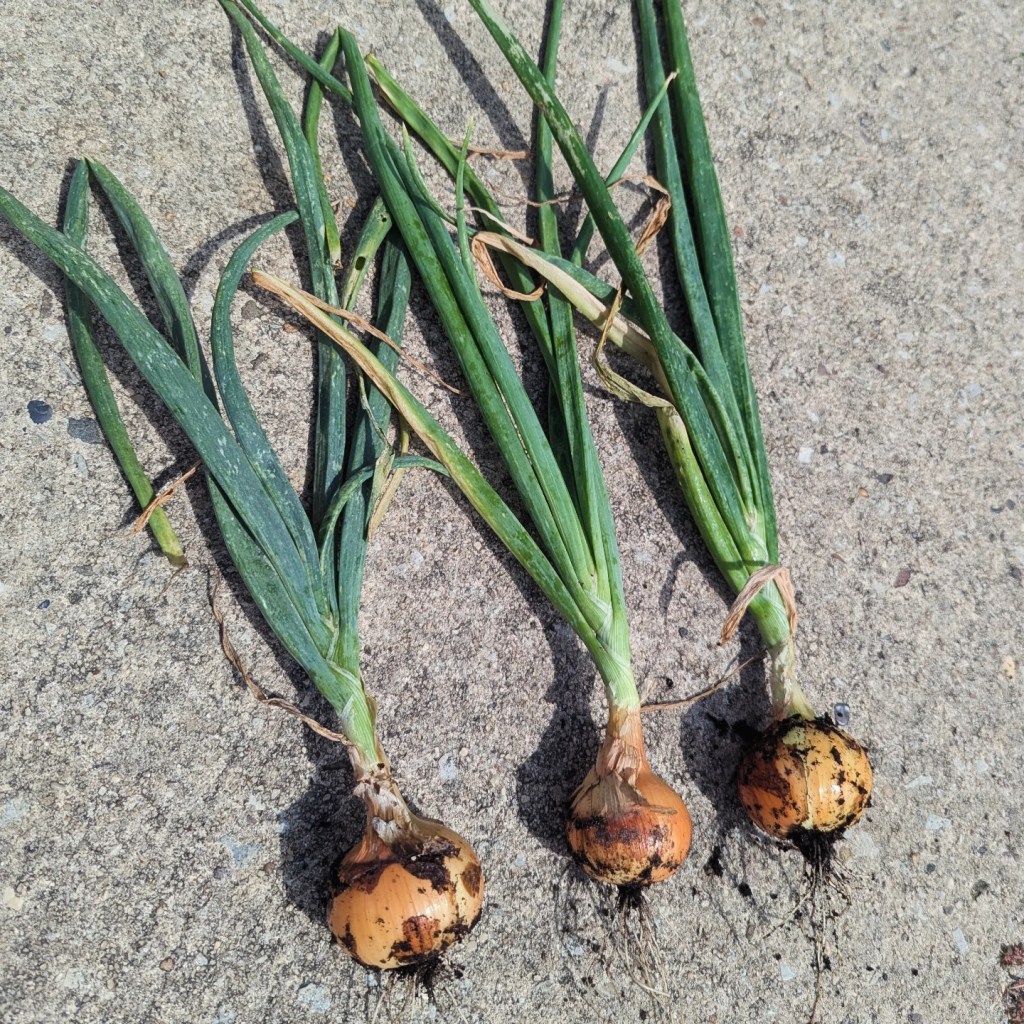
I have grown onions. Not every year, and not always with great success. It can be done, but it’s not as easy as, say, tomatoes (in my opinion). And since supermarket onions are cheap, it doesn’t always seem worthwhile.
But according to my husband, it’s worth it. He always raves about our homegrown onions and how much better they taste than the supermarket ones. They look picture perfect too, compared with how beat-up looking the supermarket ones can be.
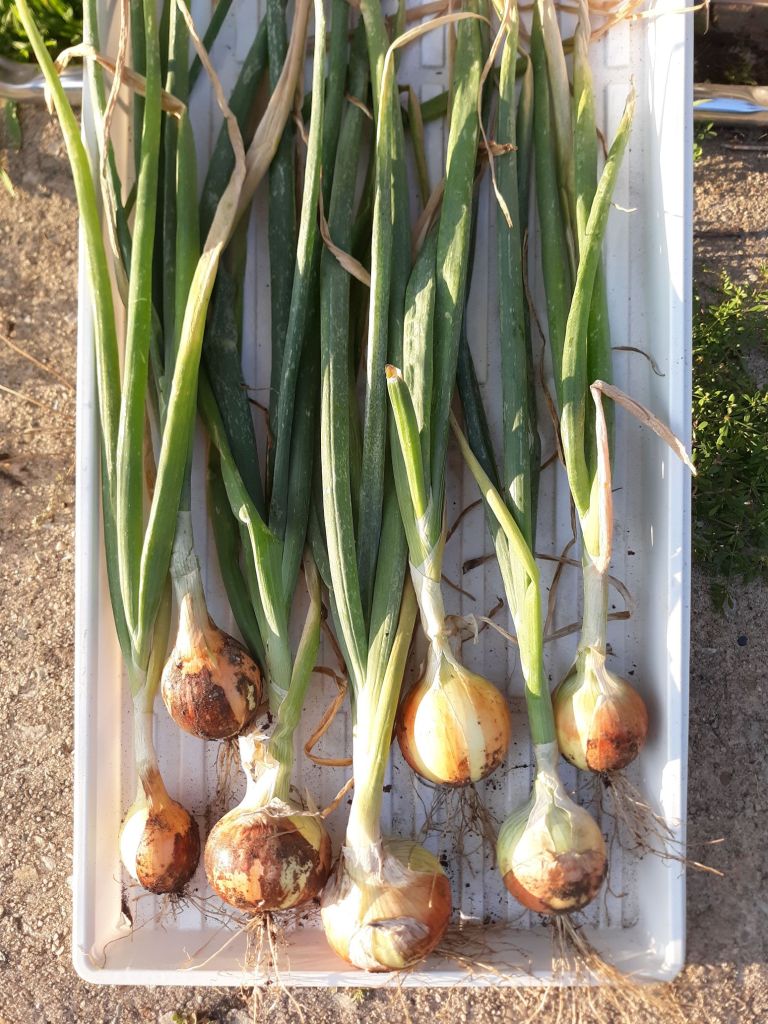
Varieties I have grown: Yellow of Parma and New York Early, which are long-day onions. Long-day onions are best suited to the north, where summer days are longer. Here in zone 7b in southern New Jersey, we have the summer daylight for long-day onions, but we can also grow intermediate (day neutral) or short-day onions if we plant them in fall and harvest them in spring. I haven’t tried this, though.
Onion seed does not keep well, so you should start with new seeds every year. I have never grown them from sets or starts.
Onion seeds can be started inside as early as January 1 in zone 7b. They need to be started at minimum 12 weeks before our last frost date, which would be around the end of January (but I’ve probably started them as late as mid-February). I usually start the seeds in small reused plastic containers, like all my other seeds, a couple seeds to a container. But I might start using a tray filled with seed starting mix, since that’s what others seem to do. The seeds are very small, so, like with carrots, it might be easier to just broadcast them and thin them out later.
Once they germinate, move them under grow lights. Opinions vary about exactly how much light they should get inside — but somewhere between 12 and 16 hours, and I’d lean towards 16.
Once the shoots start growing, keep them trimmed back to about 4 inches (just cut them with a clean pair of scissors).
I need to experiment with providing them better quality lighting/more fertilization because mine never seem to get that robust inside. I also may not be thinning them enough. I have read that the stalks should be thick as a pencil by the time you transplant them outside. Mine never are. But they seem to still do OK.
When they have 3 or 4 leaves (it’s weird to call them leaves, but that’s what they are), you can pot them on into deeper containers.
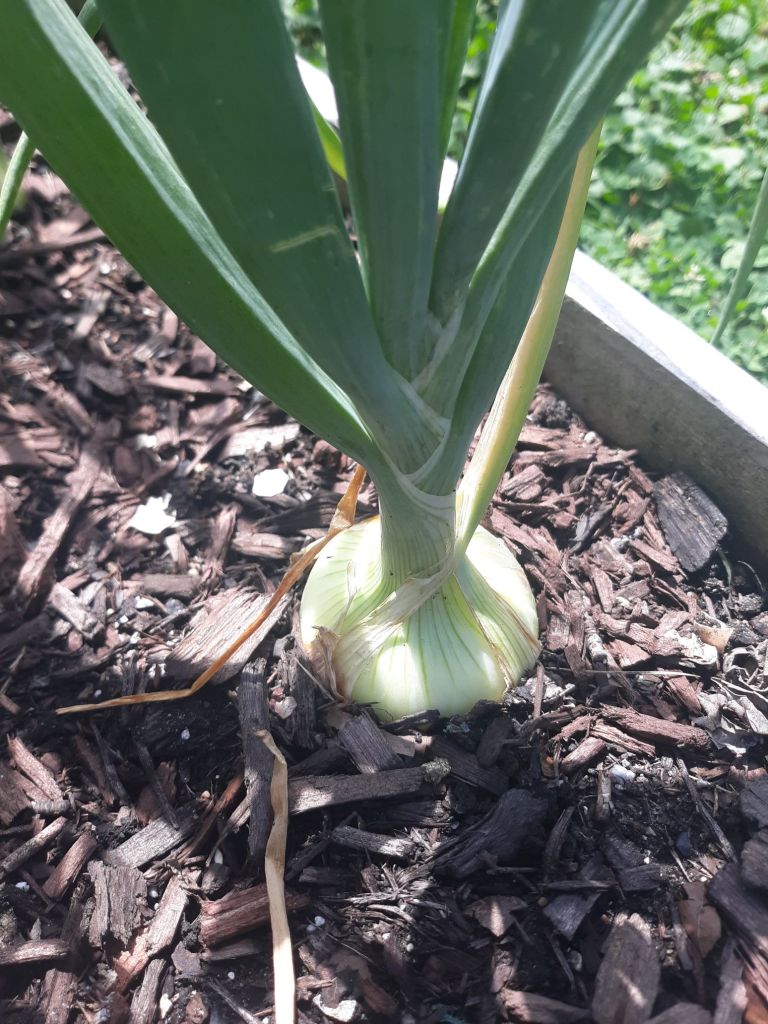
Around the end of March/early April, harden off the seedlings and then transplant outside. They should be about 6 inches apart. I have grown them in containers with good results, if the container was on the large side, but in the ground is probably best. Onions need full sun and are “greedy feeders,” as I remember reading somewhere, so fertilize when planting and then every few weeks until bulbing starts. I water my onions about the same as everything else in the garden: more when they are starting out, then every other day or so unless it’s very hot, and less if it is rainy.
PESTS:
Watch out for pests, such as thrips. Keep an eye out for anything unusual on the leaves. If you find something, investigate online and act accordingly, with haste! Quick action can save them.
Harvesting:
You have to wait for the necks to get soft and flop over, or at least most of them.
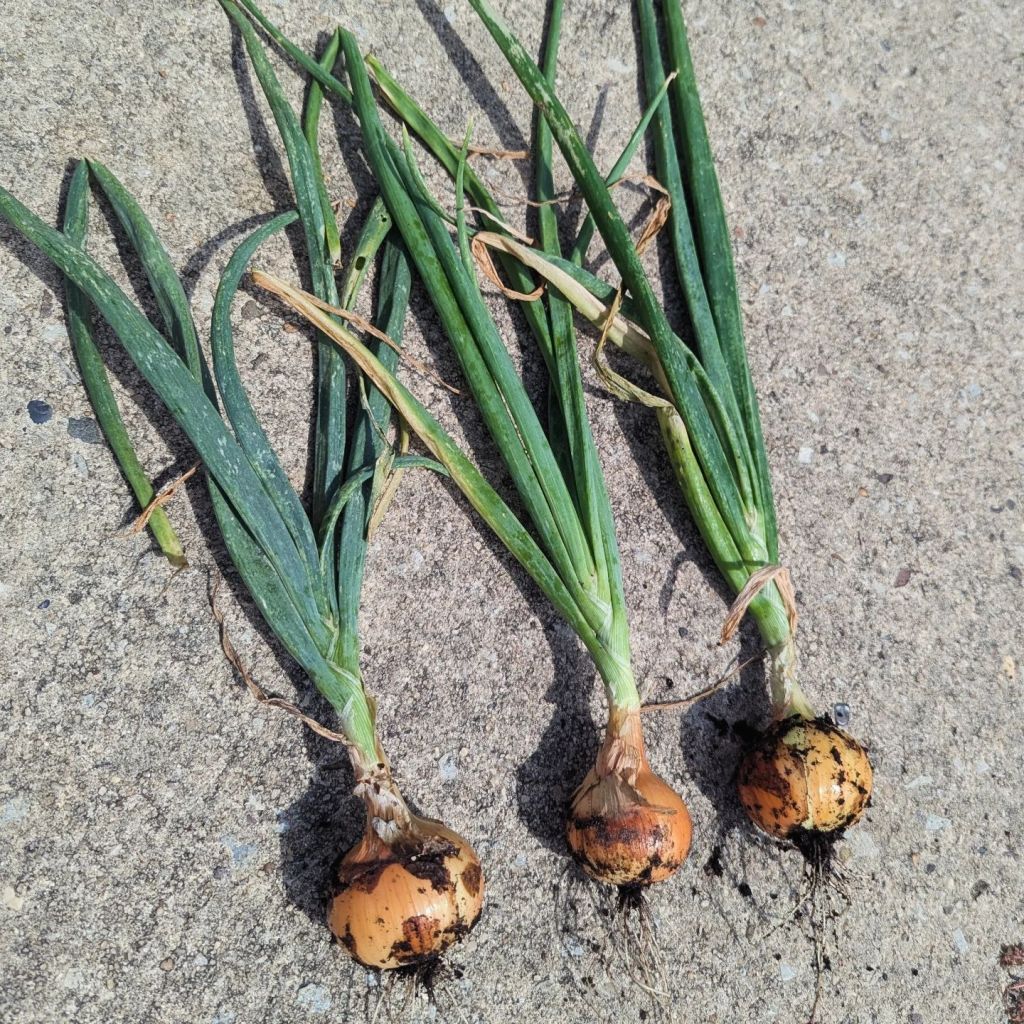
Carefully dig them out, shake off the excess dirt, and lay them somewhere dry, shady and breezy to cure. A front porch works well; I’ve been using the kids’ old wooden playset. You don’t want them to get wet. Let them cure until they seem thoroughly dried out.
Storage:
I store mine in the basement and they keep well. I’ve never grown enough to really test how long they might keep. Dark, cool and dry are the ideal conditions.

 Garden State of Mind
Leave a comment