
Tomatoes! Nearly every year, I grow more tomatoes than anything else. Enough to make gallons of sauce and to give them away in free piles outside my house.
Indeterminate tomatoes are those that vine and sprawl all over. Determinate ones have neat and tidy bushes. I’ve only ever grown indeterminate.
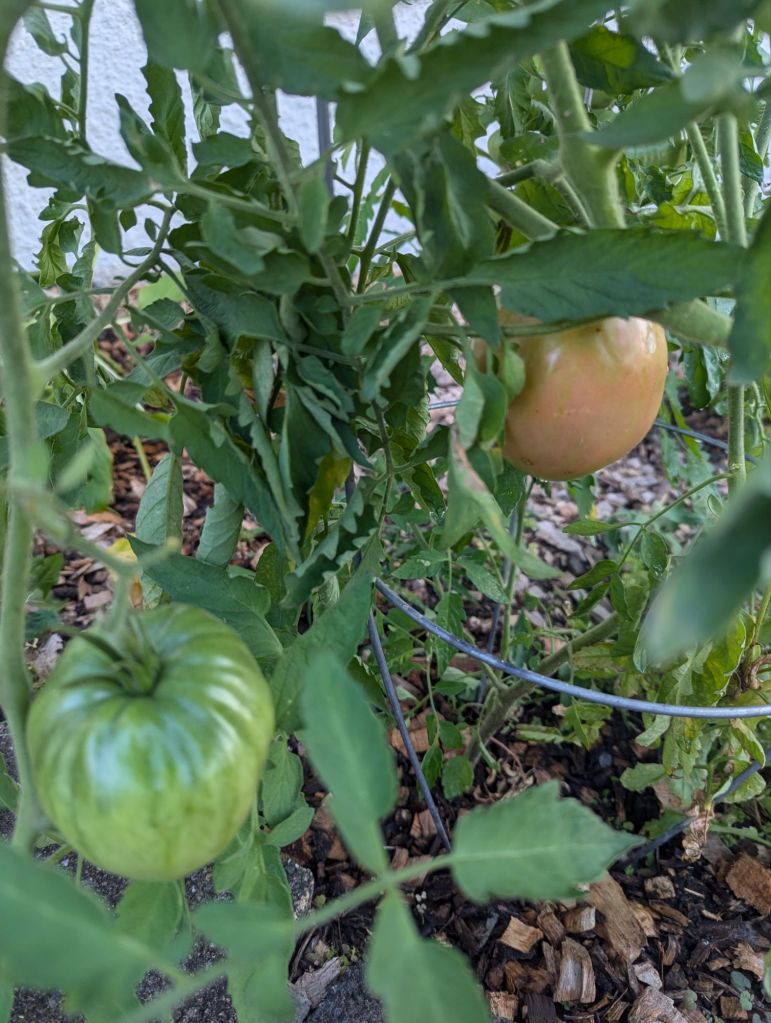
My tried and true tomato is Amish Paste. I have grown them most of the 13 seasons that I’ve been gardening. I don’t really enjoy fresh tomatoes; I grow them strictly to make sauce and other items. And Amish Paste is amazing for sauce. They are really meaty inside.
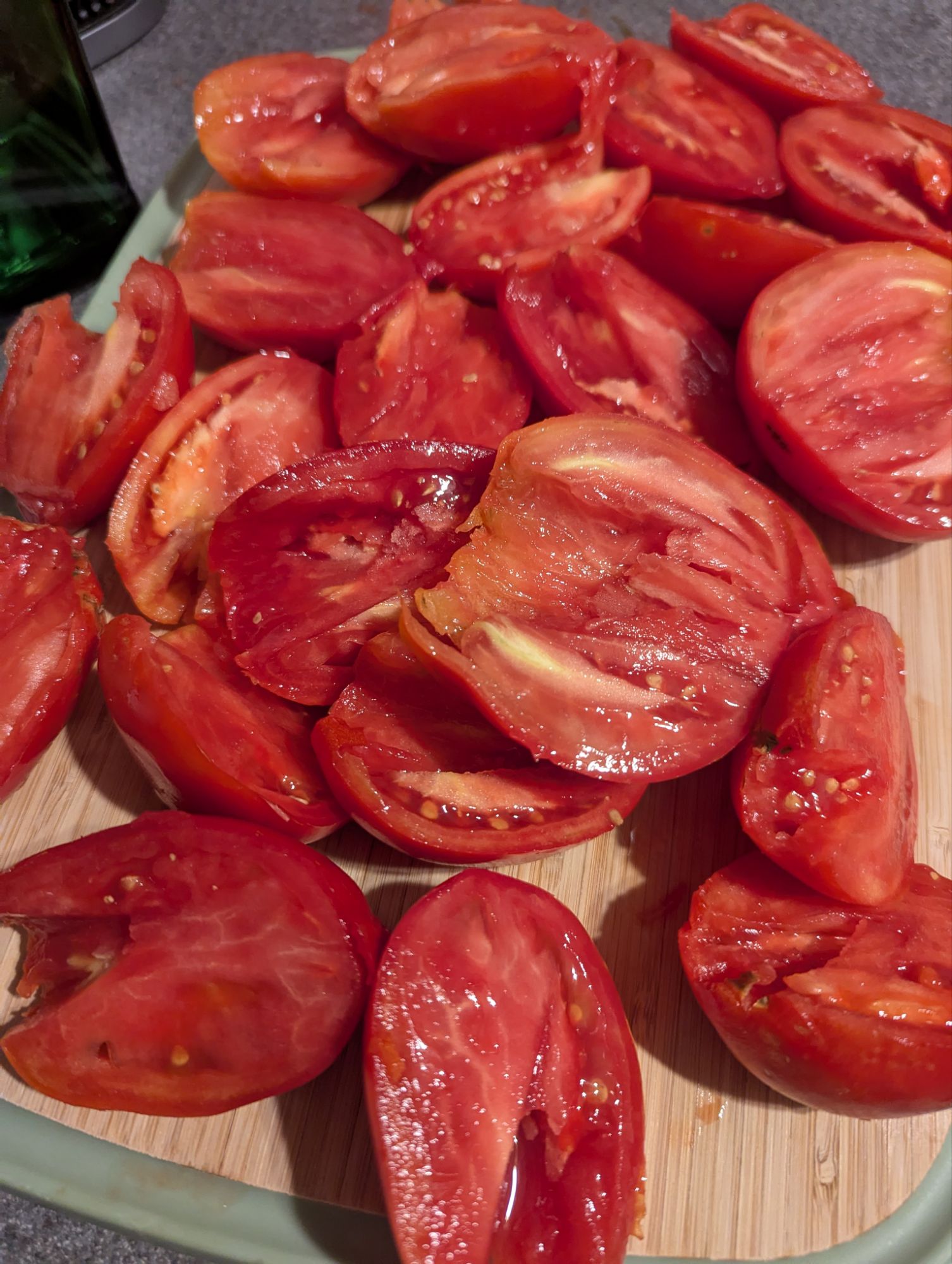
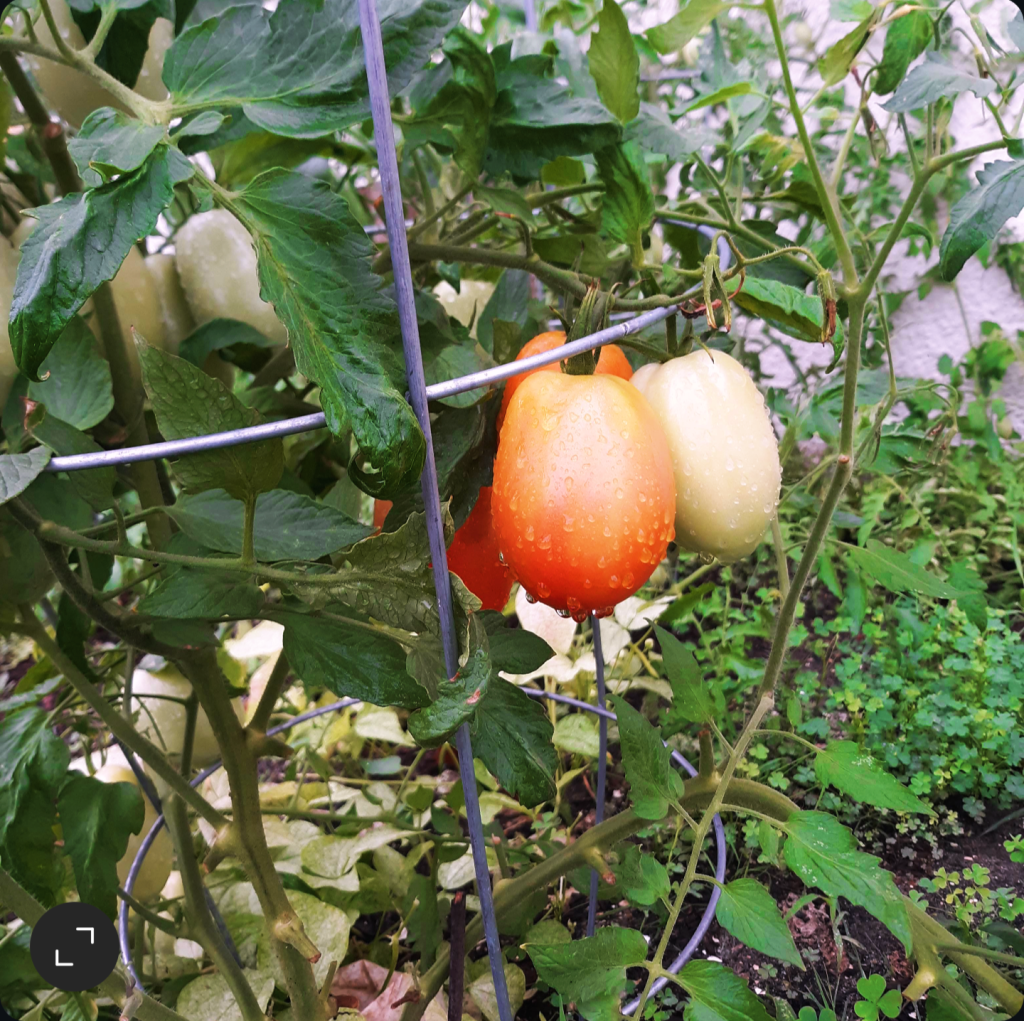
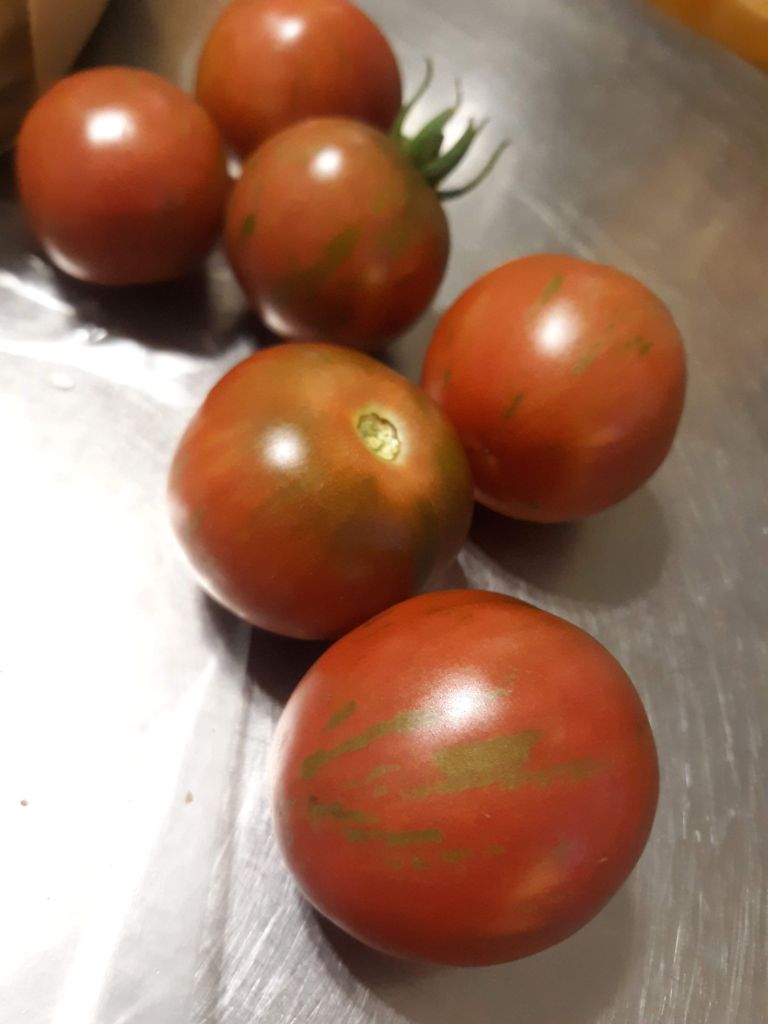
That said, I have also grown Bread and Salt, the Rutgers tomato, and Black Vernissage and they did well. I have a vague memory of trying Brandywine way back in the beginning. And I’m pretty sure I’ve grown Plum Regal too (another paste tomato).
I have almost always started tomatoes from seed indoors. A few times I have bought young tomato plants to transplant.
Start seeds indoors around the end of February (8 weeks before the approximate last frost time, end of April/early May). Start them in vermiculite or seed-starting mix in clean plastic cups sitting in a plastic tray or container. Cover with plastic wrap until they sprout – but don’t let too much water stand in there, or mold will develop. Keep them in a south-facing window or use grow lights (keeping the lights on 12 to 15 hours a day).
When the seedlings have their first set of “true” leaves (not the seed leaves, which are the first ones that develop), repot them. Use moistened potting soil, not garden soil. Use a bigger, mainly deeper, pot, and bury them up to the first set of true leaves. Water them and keep them inside (don’t stress them). Avoid holding them by the stem.
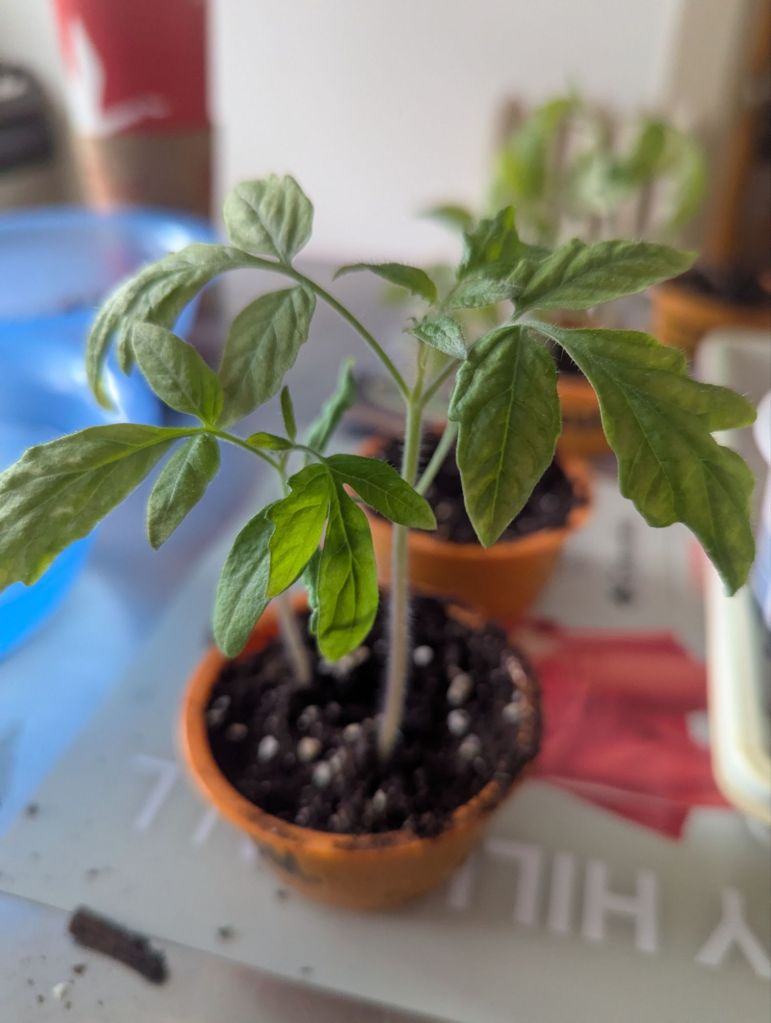
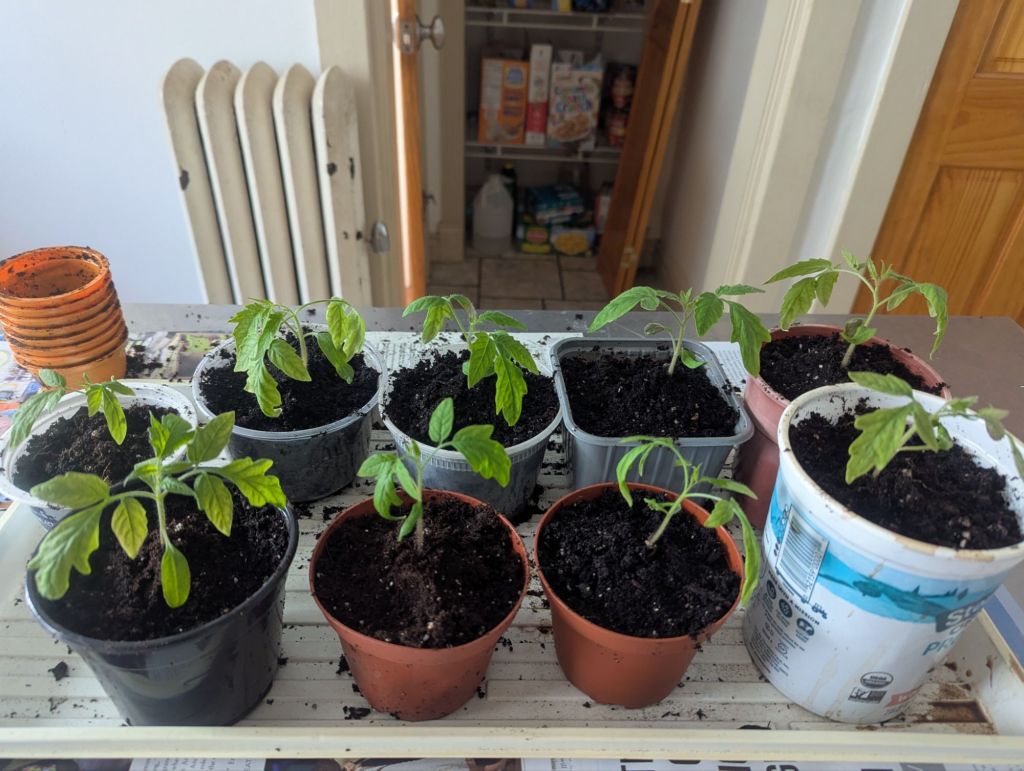
As the last frost date approaches, harden off the seedlings.
Prepping the garden bed:
Although you can grow indeterminate tomatoes in containers, they will do better in the ground. The warmer the soil is, the faster they will grow. Consider covering the soil with black plastic for a few weeks prior to planting. Tomatoes need 8 hours or more of sun and rich, well-drained soil.
Transplanting into the garden:
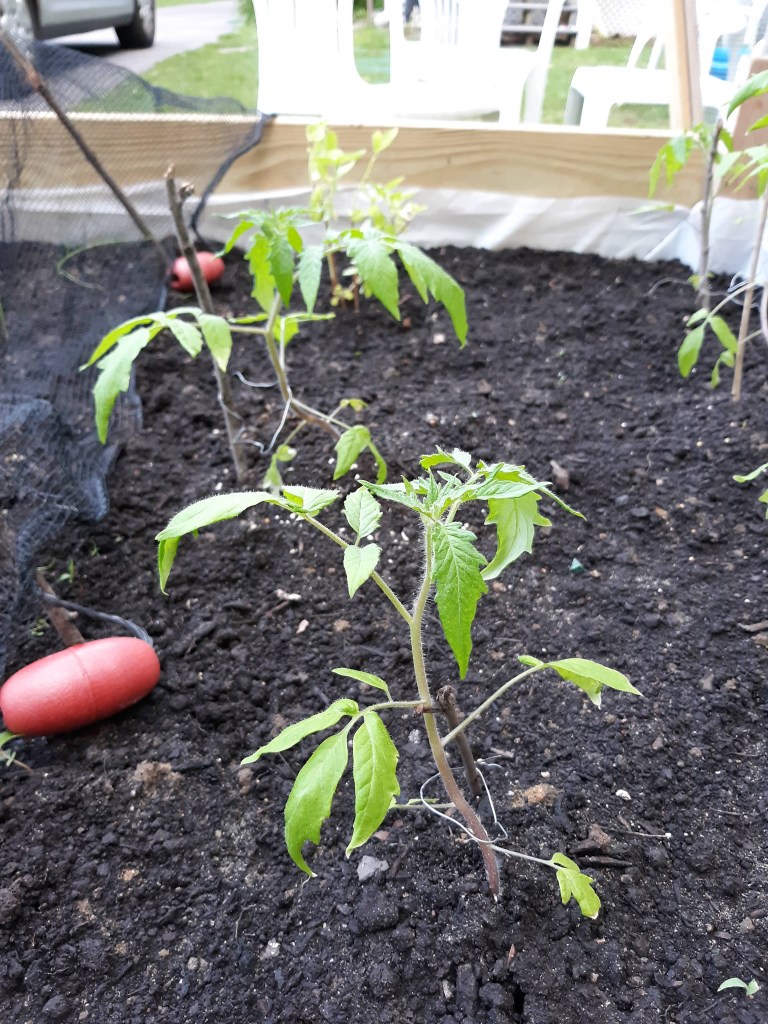
Wait until nighttime temperatures are consistently above 50 degrees (generally, after May 7 in southern NJ). Dig a hole a few inches deeper than the pot the seedling is in. Plant the seedlings deep with only the topmost leaves aboveground. This is something I tend to forget because it feels unnatural to bury so much of the stem, but it’s important. The buried stem will send out more roots. Water the seedlings. Add your staking system in at this time or not too long after.
Care during the growing season:
While roots are developing, you can water infrequently, watering deeply each time that you do. But later, when tomatoes form, you need steady, even, pretty much every-day watering to avoid cracking, blossom end rot, etc. It’s better to water the soil, as opposed to spraying the leaves (yet I still do it). Someday I will get soaker hoses laid in the garden.
You can add mulch to the tomatoes to help them conserve moisture and to keep weeds in check. Mulching also helps keep dirt from splashing back up onto the leaves. But leave about two inches unmulched around the stems.
Fertilizing:
A good guide to fertilizing tomatoes can be found here. But basically, it’s at planting time, again close to when the flowers are going to bloom, and maybe one more time after that when the fruits are small.
Diseases/Problems:
One year I had some kind of pretty bad tomato disease that wilted and killed a plant in no time flat. I think that was the year of the Black Vernissage. Some of the plants fought it off. Most years the plants are fine, and if they do get something it’s at the end of the growing season and just affects the leaves. I think it’s usually “early blight” that they get.
Blossom end-rot (the bottom of the tomato gets black and nasty) for the most part comes from the tomato receiving inconsistent amounts of water. If I see some with blossom end-rot, I remind myself to water more frequently and it goes away.
Cracking is harder to avoid. It’s also caused by moisture issues. Using soaker hoses for slow, steady watering probably helps. I have simply resigned myself to the fact that some of my tomatoes are going to have ugly cracks. Since I am just turning them into sauce and it’s mainly a cosmetic issue, I don’t worry about it too much. Unless the tomato’s skin has been breached (like by an animal’s teeth), I am going to use it.
I’ve never (knock on wood) had much of a problem with tomato pests. You do need to keep an eye out for the tomato hornworm, a chunky bright green MF’er who will feast on the plants. They blend into the stems and are hard to spot.
To Pinch or Not to Pinch:
I have spent a good deal of time pinching off tomato flowers that I deemed excessive in order to try to get the plant to focus its energy on tomatoes that had already formed. But I’ve always suspected that this was a waste of time. The plant is going to carry out its biological mandate. Its goal isn’t to make nice tomatoes for your sauce, but to create as many seeds as possible to ensure that it reproduces. So it’s going to create more flowers (which become tomatoes, which have seeds) whenever it can. This study seems to back me up.
To Prune or Not to Prune:
Along the same lines, the plant wants to grow lots and lots of branches, so it can have lots of flowers and eventually lots of tomatoes. Most info I’ve read encourages the tomato gardener to prune heavily. I do think it’s important to prune branches to keep the plant manageable and to avoid disease. There should be plenty of room for air circulation among the leaves. Branches shouldn’t be on the ground. But tomatoes grow really fast, and unless I am out there pruning every day, there are going to be a lot of branches. I don’t worry about it too much. (I recognize, though, that in part I just hate killing perfectly good growth (just like I hate thinning seedlings), and I need to get more ruthless. I’m better than I used to be.)
Why Aren’t My Tomatoes Getting Red?
Tomatoes, like most people, prefer temperatures in the 80s and don’t really dig the 90s. We seem to be having a lot more days in the 90s in our summers here in South Jersey. A heat wave is going to keep green tomatoes from getting red. Unless you get your tomatoes in the ground on the early side, the high heat of July probably means you won’t be getting red tomatoes until August. It’s frustrating, but have patience; cooler temps will come eventually.
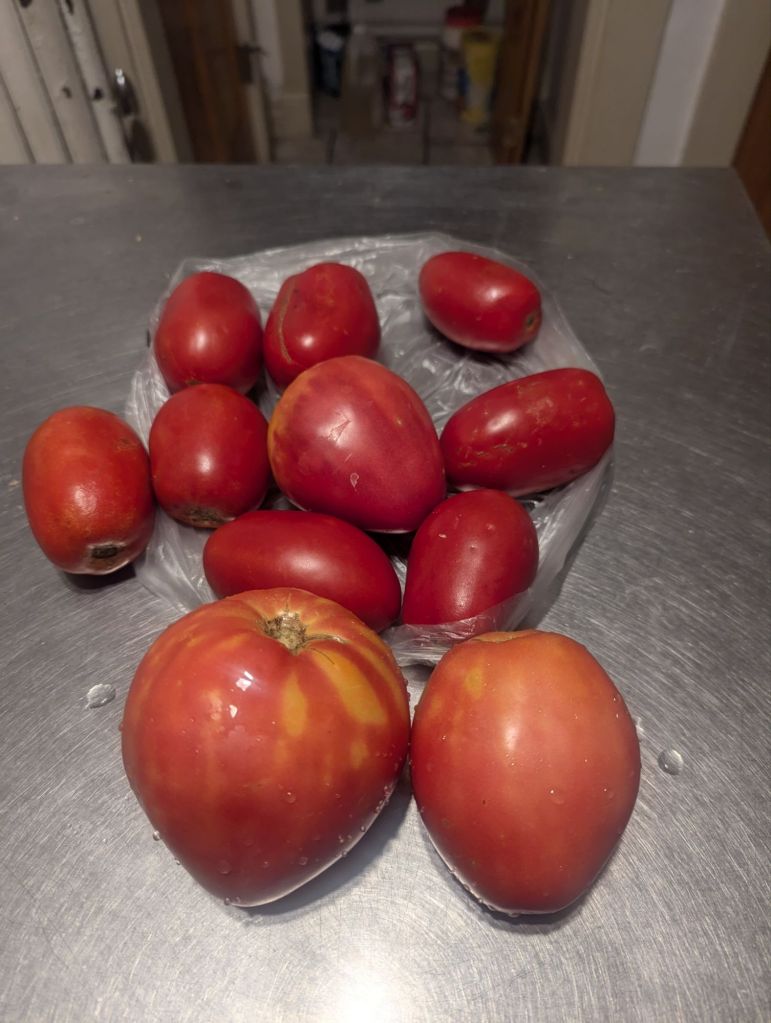
I used to think that it was better to let my tomatoes ripen on the vine. But that’s yet another myth. The best practice is to wait until you see a touch of red somewhere on the tomato and then pick it. With Amish Paste, remember to check the very point of the bottom; it seems to often start there. Bring it inside, and it will be fully red in a week or less. Once it starts to go red, it’s bound to finish, so pick it and bring it inside to avoid a squirrel nabbing it, cracking or some other calamity. If you pick a fully green tomato, it might ripen inside, but it will take longer and it might never ripen or it might get funky.

Harvesting:
It’s currently October 13 and I’m still picking tomatoes. The peak of the harvest was back around Labor Day. As mentioned above, simply pick when they start to redden and let them sit at room temperature in any convenient place to finish ripening. Use ’em fresh or preserve ’em before they go rotten!


 Garden State of Mind
Leave a comment